
Vision Therapy for Eye Strain, Double Vision and Eye Teaming Problems in India
Vision therapy is a supervised program of eye exercises and training that teaches your eyes and brain to work together comfortably. It helps with problems that glasses alone cannot fix, such as convergence insufficiency, focusing problems, double vision, and the eye strain and headaches that come with them. At Vasudeva Vision, our optometrists, trained in orthoptics, design personal vision therapy plans for children, teens and adults across India.
What Is Vision Therapy and How Does It Work?
Seeing comfortably needs more than sharp eyesight. Both eyes must aim at the same point, focus together and follow moving words or objects without effort. When this teamwork is weak, the muscles overwork. That is when people feel eye strain, headaches, blurred or double vision, sleepiness while reading and trouble keeping focus on near work.
Vision therapy is a structured, clinician guided program that trains these skills. Sessions use exercises, lenses, prisms and computer based tasks, supported by short home practice. The goal is simple: clear, single and comfortable vision for reading, screens, sports and daily life.
A straight answer: vision therapy is for eye teaming, focusing and tracking problems. It is not a treatment for dyslexia or learning disabilities, and no exercise can remove the need for glasses or reverse myopia. We examine your eyes first and tell you honestly if therapy is the right step.
What eye teaming means
Both eyes aim at the same point and share the work. If they struggle to do this up close, reading and screens feel tiring.
Why strain builds up
When the eyes work too hard to converge or focus, the muscles tire. The result is headaches, blur, double vision and sore eyes.
Why glasses may not fix it
Glasses correct focusing power. They do not train how the two eyes work together, which is what therapy is for.
Who it is for
Who Needs Vision Therapy? Children, Students and Adults
Vision therapy for children and students
Many children with eye teaming problems pass a basic vision screening, because they see letters clearly. They still get headaches, lose their place, rub their eyes or avoid reading. A full binocular vision exam finds the cause, and supervised therapy can make near work comfortable again.
- Helps with convergence and focusing problems
- Short, engaging sessions suit school age children
- Parents are guided on home practice

Vision therapy for teens and young adults
Long study hours and constant phone use stress the eyes of teens and college students. Therapy builds the teamwork and focusing stamina that exams, coaching classes and screens demand.
- Reduces strain during study and screen time
- Sessions are planned around exams and classes
- Progress is measured and shared with you
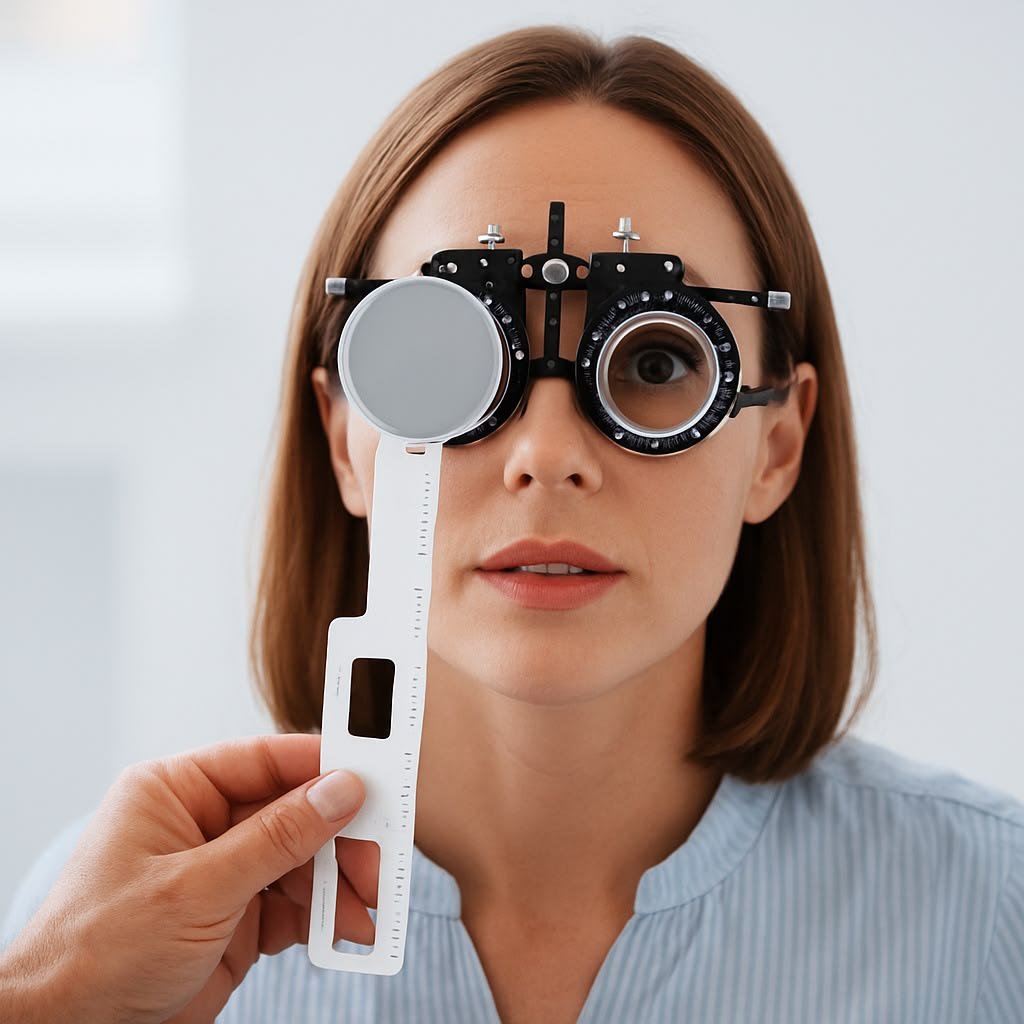
Vision therapy for adults and screen users
If you work long hours on a laptop and finish the day with headaches, tired eyes or blurred vision, an eye teaming or focusing problem may be the reason. Adults respond well to supervised therapy, and we also guide you on screen habits.
- Targets the cause, not just the symptom
- Fits around work and family
- Includes simple screen and rest habits
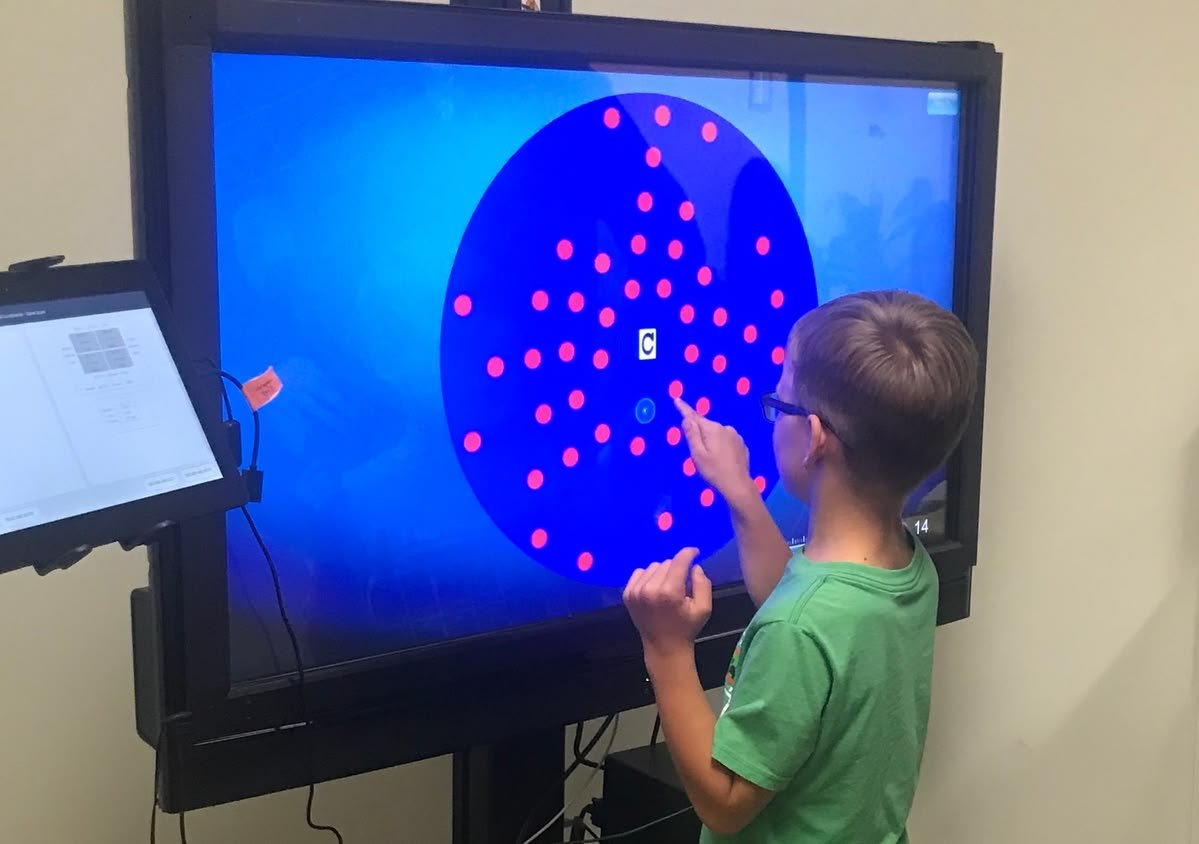
Vision therapy after a head injury
Double vision, eye strain and trouble reading can follow a concussion or head injury. Once your doctor has cleared you, vision therapy can help rebuild eye teaming and focusing. We work alongside your doctor and refer you when other care is needed.
- Assesses eye teaming, focusing and tracking
- Coordinated with your treating doctor
- Gentle, step by step progression
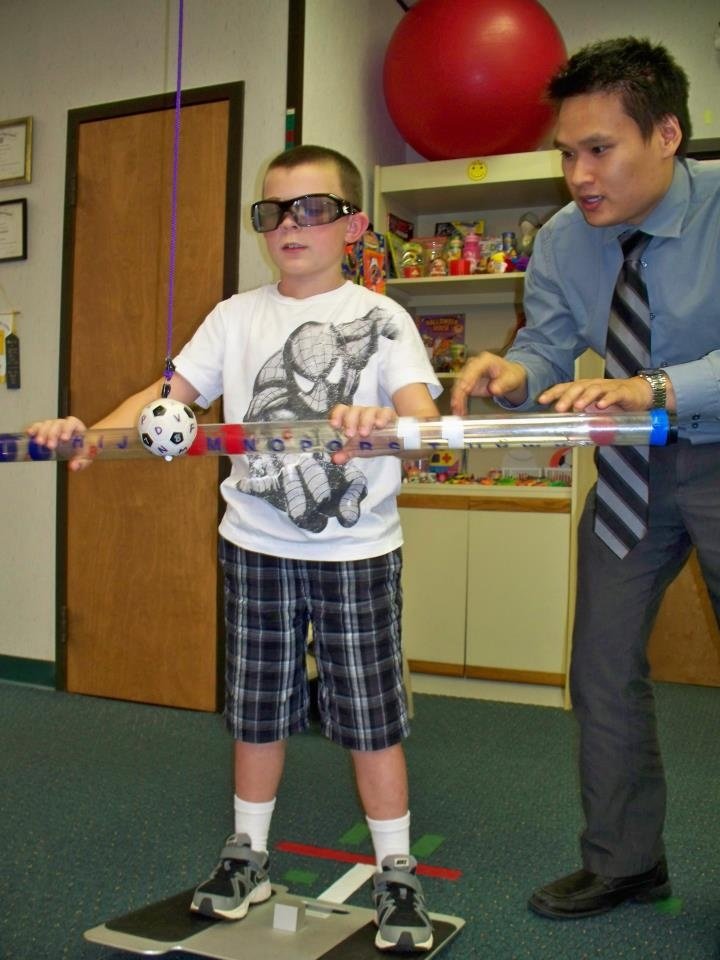
Vision therapy for lazy eye and squint
Lazy eye and intermittent squint are also eye teaming problems. Structured therapy trains the weaker eye and teaches both eyes to work together. See our amblyopia therapy page for more about lazy eye.
- Strengthens the weaker eye
- Improves coordination and depth perception
- Works alongside glasses and other treatment

Signs to look for
Signs You May Have an Eye Teaming or Focusing Problem
- Headaches or tired eyes after reading or screens
- Double or blurred vision during near work
- Words that seem to move or swim on the page
- Loses place while reading or skips lines
- Avoids reading, or feels sleepy during near work
- Closes one eye or tilts the head to see
Compare your options
Vision Therapy Versus Glasses, Home Exercises and Screen Breaks
01
Less eye strain
Training the eyes to team up and focus easily takes the load off tired eye muscles.
02
Fewer headaches
Many people notice fewer headaches after near work once eye teaming improves.
03
Clear, single vision
Therapy works on the coordination behind double or blurred vision during near tasks.
04
Easier reading and screens
Comfort improves for homework, office work and long hours on a phone or laptop.
05
Better visual coordination
Smoother tracking and focus support sports, writing and hand-eye tasks.
06
Non-invasive
No surgery and no medicines. The work is guided practice, planned around you.
| Vision Therapy | Glasses or Prism Glasses | Home Pencil Push-Ups | Screen Breaks | |
|---|---|---|---|---|
| What it does | Trains eye teaming, focusing and tracking | Corrects focus errors; prism can ease double vision | One simple convergence exercise | Rests the eyes during screen use |
| Supervised | Yes, with measured progress | Prescribed and checked | Usually self-guided | Self-guided habit |
| Results in studies | Best results in trials for convergence insufficiency | Helps focus errors, but does not train eye teaming | Less effective than supervised therapy in a large trial | Helpful habit, but does not train the eyes |
| Best for | Children, teens and adults with eye teaming problems | Anyone who needs a prescription | Mild cases, as a supplement | Everyone who uses screens |
Reading and learning
Not a treatment for dyslexia
Dyslexia is a language based difference, and vision therapy does not treat it. Therapy can make reading more comfortable if an eye problem is present.
Glasses and myopia
Does not replace glasses
Exercises cannot remove the need for glasses or reverse myopia. If you need a prescription, you should still wear it.
Effort
It needs regular practice
Results come from steady sessions and short home practice over weeks and months. Skipped sessions slow progress.
Eye health
Other causes come first
We check for dry eye, unsuitable glasses and eye disease. If we find one, we treat or refer it before therapy.
How Vision Therapy Works, Step by Step
Binocular vision exam
We test sharpness, focusing, how well the eyes team up, eye movements and eye health.
Personal therapy plan
We prescribe glasses or prism if needed and plan therapy that suits your age, symptoms and routine.
Guided sessions and home practice
You do supervised sessions with exercises and computer based tasks, plus short practice at home.
Review and maintain
We re-measure at regular visits, adjust the plan and show you how to keep the gains.
Does Vision Therapy Work? What Studies Found
Two large, government-funded trials tested structured eye treatment in children and teens. Here is what they measured.
Office-based therapy beat home exercises and placebo
In the CITT randomized trial, children did 12 weeks of therapy. The share with a successful or improved outcome:
Source: CITT Study Group, Archives of Ophthalmology, 2008 (NIH/NEI-funded).
Lazy eye still responds after age 7
PEDIG’s ATS3 trial compared glasses alone with glasses plus active treatment. The share whose vision improved by 2+ lines:
Source: Scheiman et al., Archives of Ophthalmology, 2005 (NIH/NEI-funded). Treatment was patching, atropine drops (age 7–12) and near activities.
Supervised beats unsupervised
In the CITT, therapy guided by a trained therapist outperformed the same goal pursued with home exercises alone.
Age is not a hard cut-off
Children and teens with amblyopia improved after the age at which treatment was once considered too late.
Prior treatment matters
Teens aged 13–17 who had been treated before showed little extra gain (25% vs 23%). An early, full assessment counts.
Trial results describe groups, not individuals. Outcomes depend on diagnosis, age, severity and consistency of therapy. The two trials above studied different conditions and treatments and are not directly comparable.
Find out what applies to your eyes
Book a consultation with our specialist optometrists. We examine both eyes, explain your options honestly and plan the next step with you.
Compare your options
Why Patients Choose Us for Vision Therapy in India
Four reasons people travel to us when other clinics could not help.
Binocular vision is our focus
Eye teaming, focusing and specialty lenses are our daily work, not a side service.
A complete exam first
We measure before we treat, so therapy is chosen for a proven problem and not guessed.
Trained in orthoptics
Our team includes optometrists with orthoptic training, and together they bring 38+ years of experience
Progress you can measure
We re-test at regular visits and share the numbers, so you can see what is improving.

Mr. Rajeev Vasudeva
Senior Optometrist and FounderD.R.Opt, D.Orthopt, F.D.C.L
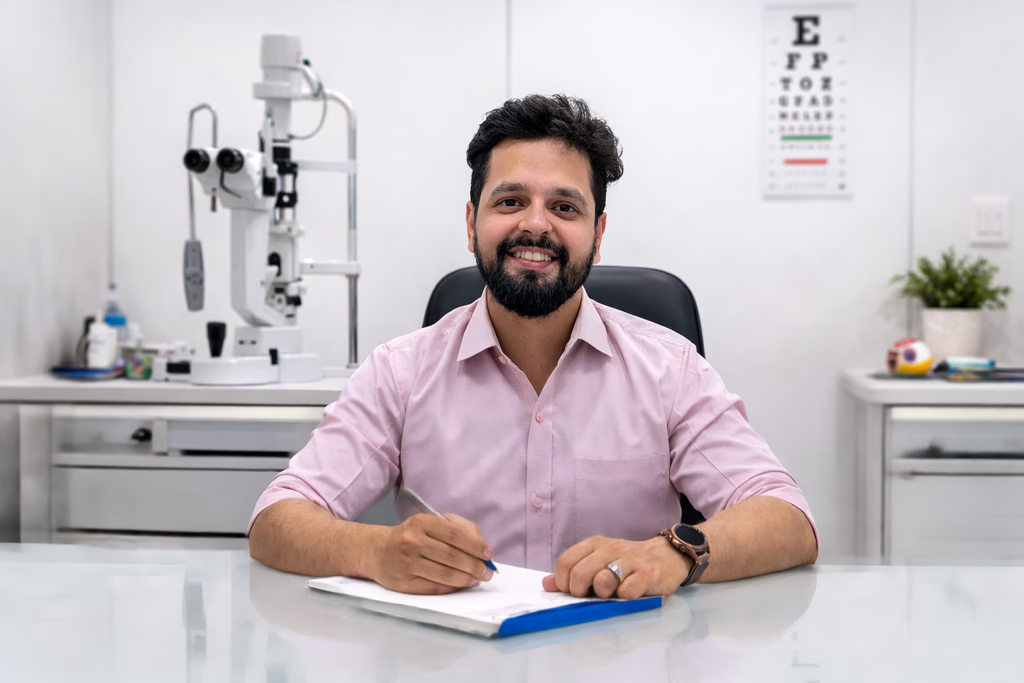
Mr. Ashiish Vasudev
Scleral Lens and Ortho-K SpecialistB.Optom, PGDOVS (Anterior Segment)
Google Reviews
What Our Patients Say
Four reasons people travel to us when other clinics could not help.
Rated by our patients on Google
Seen our work? Your review helps others with keratoconus find the right care.


 Trustindex verifies that the original source of the review is Google.
 Trustindex verifies that the original source of the review is Google.
 Trustindex verifies that the original source of the review is Google.
 Trustindex verifies that the original source of the review is Google.
 Trustindex verifies that the original source of the review is Google.
 Trustindex verifies that the original source of the review is Google.
 Trustindex verifies that the original source of the review is Google.
 Trustindex verifies that the original source of the review is Google.
 Trustindex verifies that the original source of the review is Google.
FAQ
Vision Therapy FAQs: Results, Adults, Duration, Cost and Common Questions
What is vision therapy?
Vision therapy is a supervised program of eye exercises and training that improves how your eyes work together, focus and follow moving objects. It uses exercises, lenses, prisms and computer based tasks, with short practice at home. It is used for problems that glasses or surgery alone cannot solve.
What problems can vision therapy help with?
It is used for convergence insufficiency, focusing problems, eye tracking difficulty, some types of double vision, intermittent squint, lazy eye and screen related eye strain. It can also support recovery of eye coordination after a head injury, once your doctor has cleared you. We examine your eyes first to find out which problem you have.
Does vision therapy really work?
For convergence insufficiency, yes. In a large trial funded by the National Eye Institute, about 75 percent of children who did 12 weeks of office-based therapy with home practice became symptom free or much improved, compared with 43 percent who did home pencil push-ups alone. Evidence is strongest for convergence insufficiency and some other binocular and focusing problems.
Can adults do vision therapy?
Yes. Adults with eye teaming and focusing problems often do well with clinic-based vision therapy, and studies in India have found it effective in adults as well as children. It is especially useful for people with eye strain, headaches or double vision during long hours of reading and screen work.
How long does vision therapy take?
A typical program in clinical trials lasts about 12 weeks, with regular sessions and short daily practice at home. Some people need less and some need longer. We re-test at regular visits and adjust your plan.
Does vision therapy help with dyslexia or learning problems?
No. Major paediatric and ophthalmology bodies state that scientific evidence does not support vision therapy as a treatment for dyslexia or learning disabilities. If an eye teaming problem is present, therapy can make reading more comfortable, but reading difficulty needs a separate learning evaluation and support. We will always say this clearly.
Can vision therapy remove my glasses or cure myopia?
No. Eye exercises cannot remove the need for glasses or reverse myopia. If you want to slow myopia in a child, ask us about Ortho-K and other myopia control options. Vision therapy is about eye coordination and comfort.
What is convergence insufficiency?
It is a common problem where the eyes struggle to turn inward together to look at near objects. It causes eye strain, headaches, blurred or double vision, sleepiness and trouble concentrating while reading. It affects roughly 2 to 8 percent of people and is diagnosed only with a proper eye exam.
Is vision therapy painful or safe?
It is safe and non-invasive. There is no surgery and no medicine, and it does not hurt. Some exercises feel tiring at first, like any new training, and we make sure sessions stay comfortable and motivating, especially for children.
Do I have to practise at home?
Yes, short daily practice at home is an important part of the plan and the trials that showed the best results combined supervised sessions with home reinforcement. We give you a simple routine that fits around school or work.
How much does vision therapy cost in India?
The cost depends on your therapy plan, how many sessions and reviews are needed and whether glasses or prism are part of it. After your eye exam we share a clear estimate before therapy starts.
Do I need an appointment, and can I come from another city?
Yes, please book by call or WhatsApp so we can set aside enough time for a complete exam. Patients travel to us from across India. Call first and we will tell you what to bring, including old prescriptions and any eye reports.
Book a consultation
Ready to See More Clearly?
Share a few details and our team will guide you on the next step.